When Is It Time to Remove a Tree? Signs Connecticut Homeowners Should Watch For
Mature trees are one of the best things about owning property in Connecticut. They offer shade in summer, wind protection in winter, and a sense of permanence that ties a landscape together. But a tree that is in decline can shift from an asset into a serious hazard — and knowing when that line has been crossed is one of the most common questions we hear from homeowners across Bethel and Fairfield County.
Removal is rarely the first choice. A healthy tree can often be preserved with proper pruning and care. The goal is to recognize the difference between a tree that needs attention and a tree that has become a genuine risk to your home, your family, or your neighbors' property.
Signs a tree may need to come down
No single sign automatically means a tree has to be removed, but several of these together are a strong signal that it's time for a professional assessment:
- Large dead limbs in the upper canopy, especially over a roof, driveway, or play area
- A trunk that has developed a noticeable lean or cracks running through it
- Mushrooms or fungal growth around the base, which can indicate internal decay
- Bark falling off in large patches or trunk cavities that hold water
- Roots that have been cut, compacted, or damaged by construction or trenching
- A tree that has already dropped major limbs in a storm
Location matters as much as condition
A tree's risk depends heavily on where it stands. A declining tree in the middle of an open field may be safe to leave as habitat for wildlife. The same tree leaning toward a bedroom or hanging over a power line is a different situation entirely. When a hazardous tree is close to a structure, the margin for waiting is much smaller.
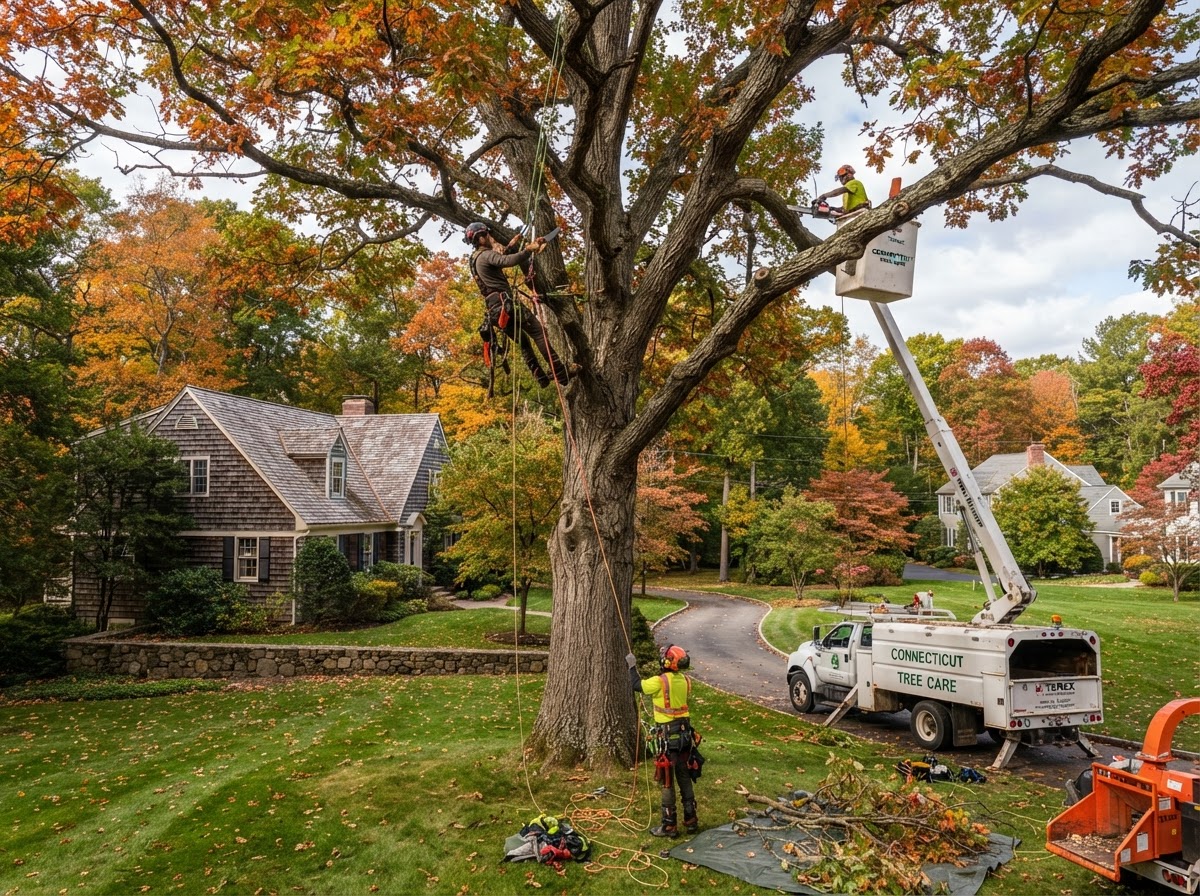
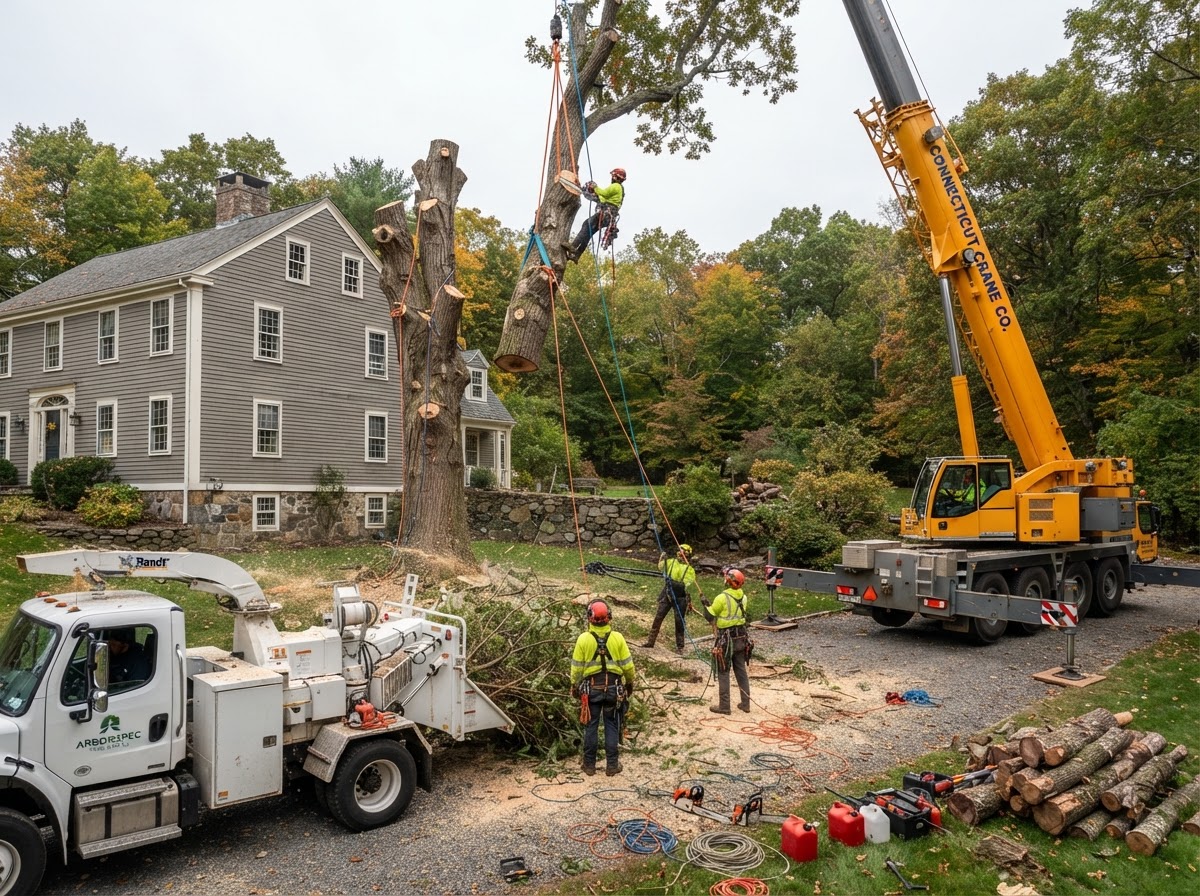
In tight Fairfield County lots, where homes sit close together and trees often grow near utility lines, removal becomes a technical job. Sectional dismantling — taking a tree down in controlled pieces with rigging — is what keeps limbs from landing where they shouldn't. That's why tree removal near a house is not a do-it-yourself project.
What happens after the tree comes down
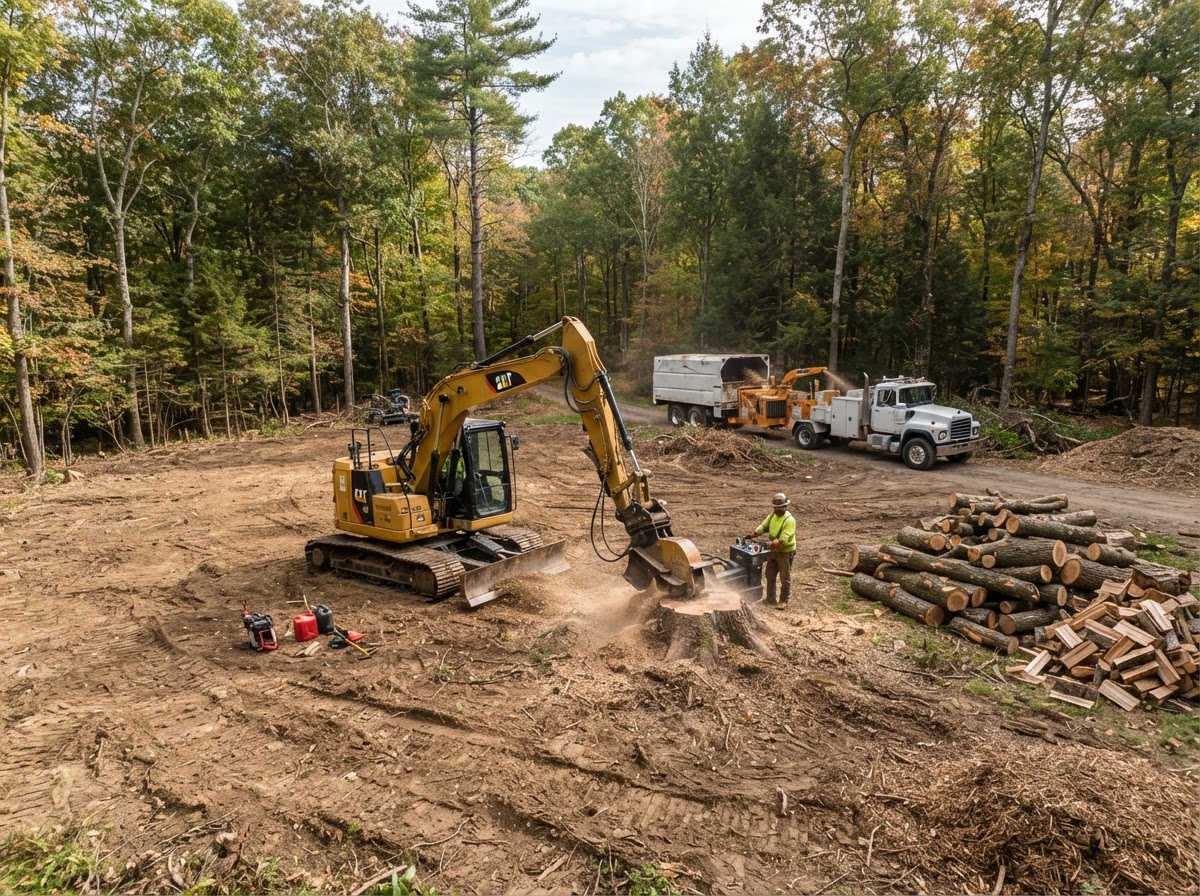
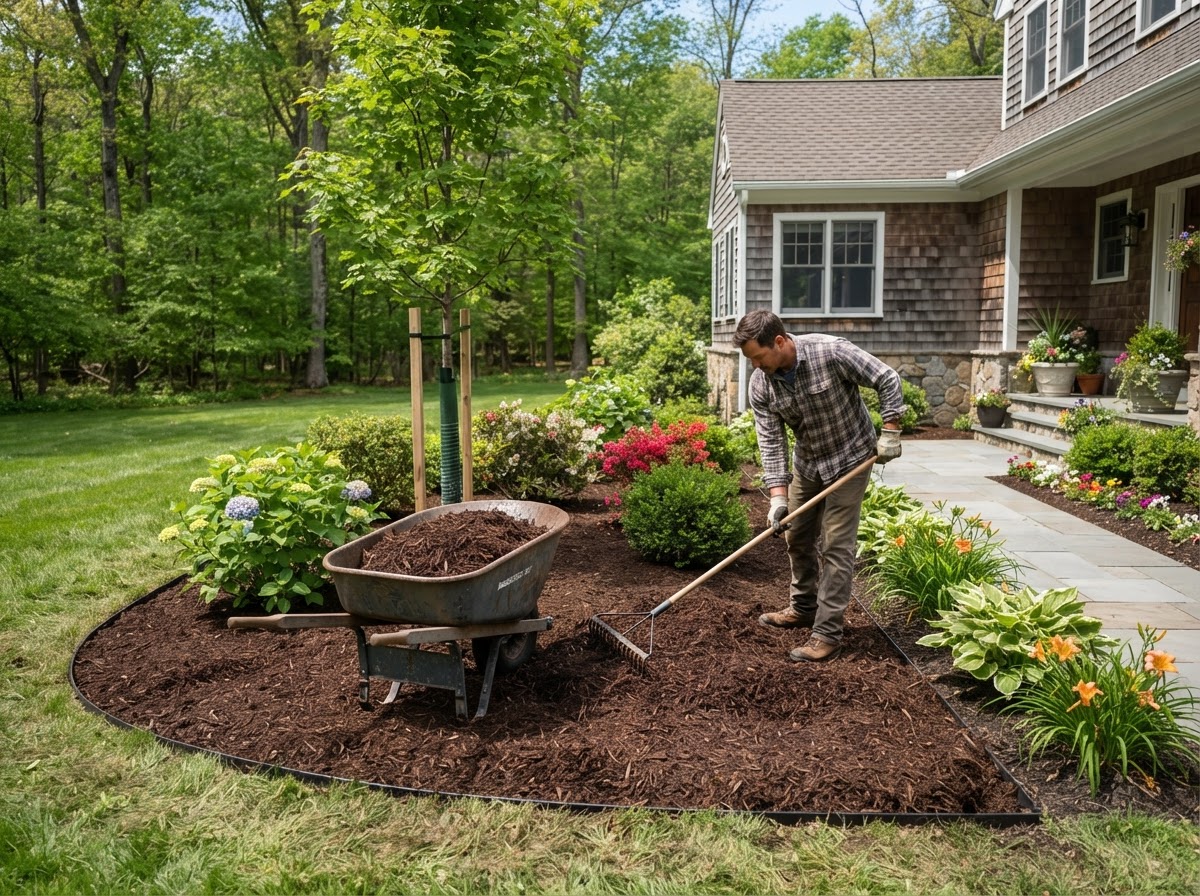
Removing the trunk and canopy is only part of the job. The stump that's left behind is a tripping hazard, an obstacle to mowing, and a magnet for decay and pests. Most homeowners pair removal with stump grinding so the area can be regraded, seeded, or built over. If you're planning a new planting bed, patio, or fence in that spot, grinding the stump below grade is the clean way to prepare the space.
When preservation is the better answer
It's worth saying the opposite, too: many trees that homeowners worry about are perfectly healthy and simply need maintenance. Crown thinning to improve airflow, deadwood removal, or structural pruning of a young tree can add decades to its life. A proper assessment tells you whether a tree is a candidate for care or for removal — and an honest contractor will tell you which one it is.
Serving Bethel and Fairfield County
We assess and remove hazardous trees for homeowners throughout the area. If you're unsure about a tree on your property, the simplest next step is a look from someone who does this every day. We serve Bethel and the surrounding communities and can usually get to your property quickly.
Worried about a tree on your property? Request a free estimate and we'll give you an honest assessment of whether it can be saved or whether removal is the safer path.
Ready to get started?
If this article hit on something you're dealing with on your property, the next step is simple — request a free estimate and we'll take a look.