A Year-Round Tree Care Calendar for Connecticut Properties
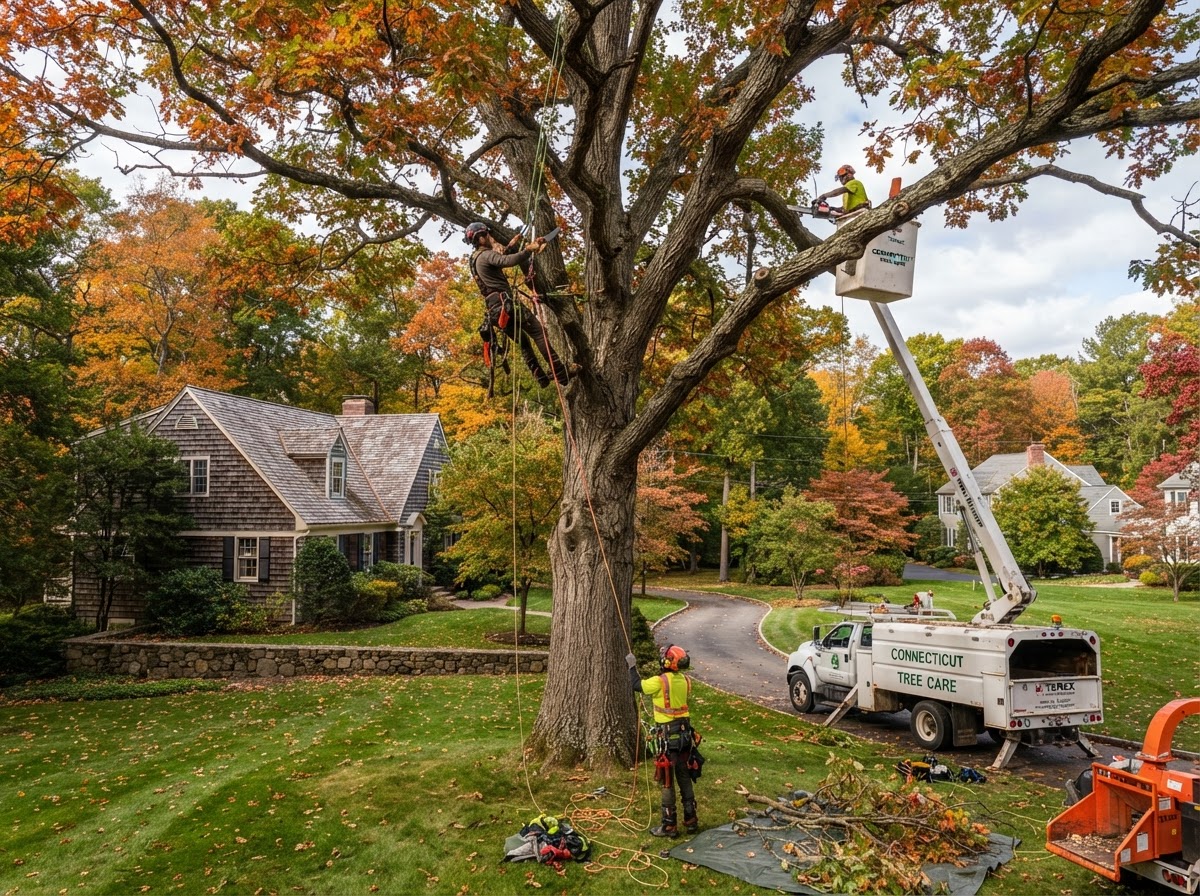
Healthy trees don't happen by accident. They come from consistent, well-timed care that respects how each species grows and how Connecticut's seasons shape a property. A tree that gets attention at the right points in the year is stronger, safer, and far less likely to need emergency removal down the road.
Here's a straightforward way to think about tree care across the calendar year in Fairfield County.
Winter: dormant-season pruning
Late winter, while trees are dormant, is the best window for most structural pruning. With the leaves gone, the structure of the tree is visible, and pruning cuts heal cleanly once growth resumes in spring. This is the time to remove crossing branches, thin crowded canopies, and shape young trees so they develop strong form.
Dormant pruning also reduces stress on the tree. Without the demand of active foliage, a tree can direct its energy into sealing pruning wounds as the growing season begins.
Spring: inspect and address winter damage
After a Connecticut winter, spring is the time to walk your property and look for broken limbs, frost cracks, or trees that have shifted. Snow load and ice storms can damage branches that aren't obvious until the canopy fills out. Spring is also a good moment to assess young trees — checking stakes, watering, and making sure new plantings are establishing well.
Summer: monitor health and water
Summer heat and dry spells stress trees, especially younger ones and those in compacted urban lots. Deep watering during dry weeks, mulch to hold moisture, and a watchful eye for pests or early leaf drop all matter now. Summer is generally not the time for major pruning, but deadwood removal is fine and sometimes necessary after storms.
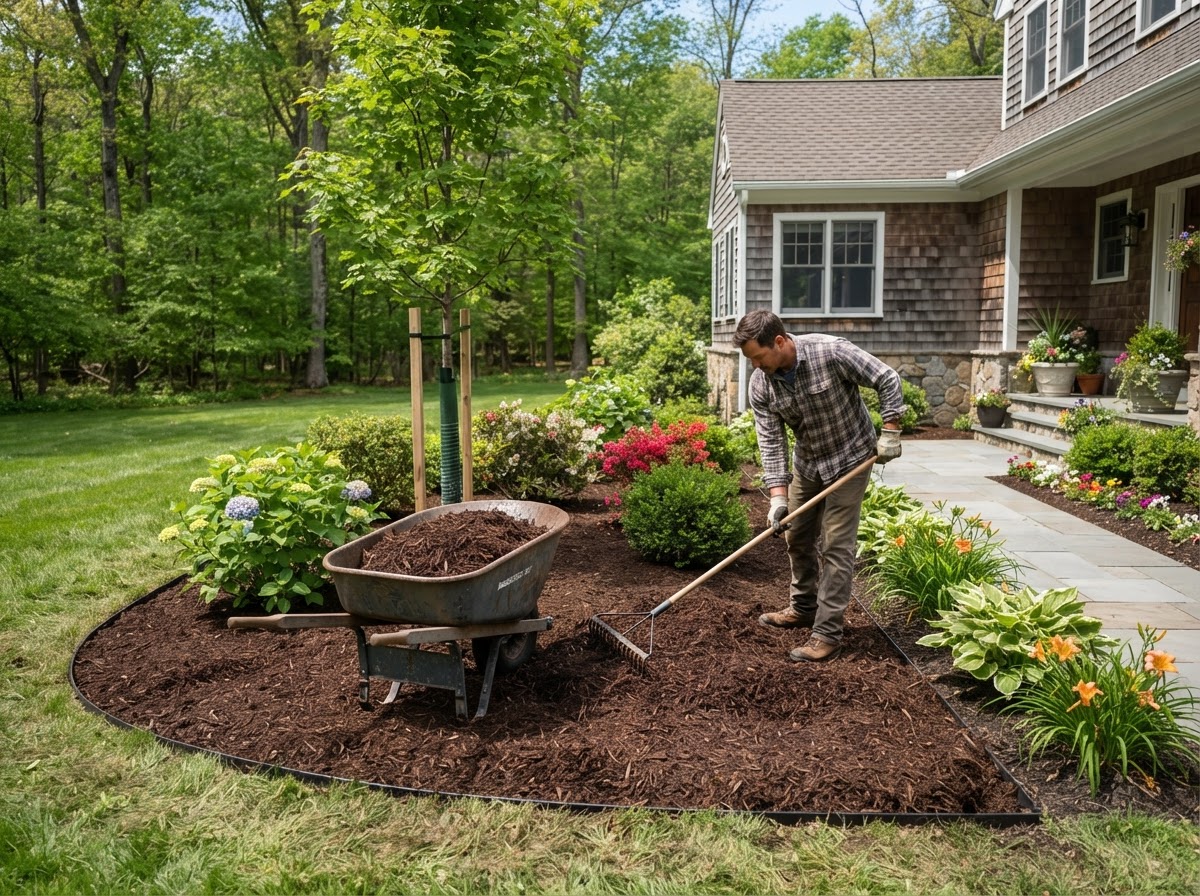
Mulch is one of the simplest, highest-impact things you can do for tree health. A proper layer conserves moisture and moderates soil temperature — just keep it away from the trunk to avoid rot.
Fall: cleanup and storm prep
Fall is for cleanup and preparation. Removing deadwood before winter storms, clearing out beds, and addressing any tree that looked stressed through summer all set up a healthier property for the next year. If a tree has been questionable for a season or two, fall is a good time to make a decision before winter weather makes an emergency of it.
After any storm: don't wait
The one rule that overrides the calendar: after a significant storm, inspect your trees. Hanging limbs, split trunks, and partially uprooted trees are hazards that get worse, not better, with time. A quick assessment after a storm can prevent a small problem from becoming damage to a roof or a car.
Care that fits your property
Every property is a little different — the mix of species, the exposure, the soil. The right care plan depends on what's actually growing on your land. If you'd like a seasonal approach to keeping your trees healthy and safe, request a free estimate and we'll take a look at what your property needs.
Ready to get started?
If this article hit on something you're dealing with on your property, the next step is simple — request a free estimate and we'll take a look.