Mulching Done Right: Benefits, Common Mistakes, and When to Refresh
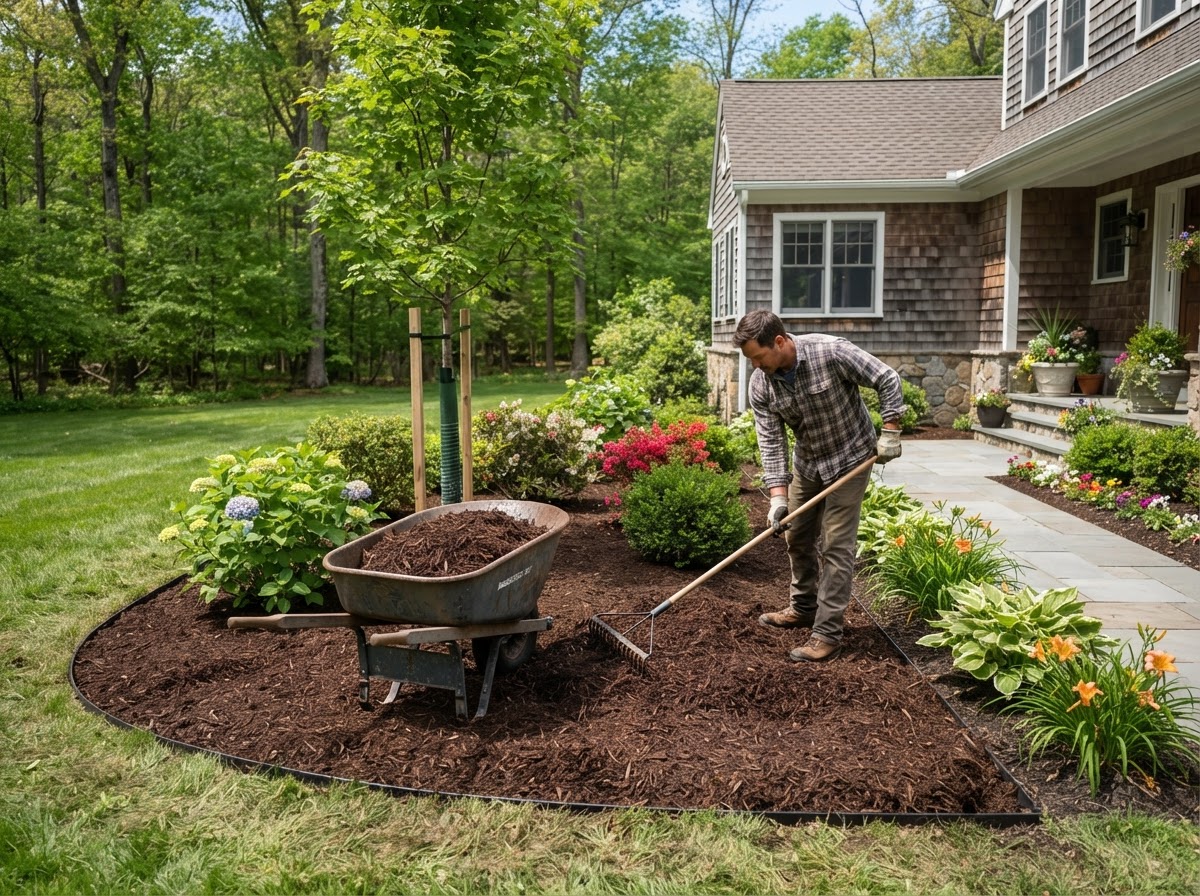
A fresh layer of mulch is one of the simplest improvements you can make to a property. It instantly makes beds look maintained, but the real value is underneath: mulch conserves moisture, moderates soil temperature, suppresses weeds, and protects tree roots. The catch is that mulch only delivers these benefits when it's applied the right way — and a few common mistakes can actually harm the plants it's meant to protect.
What mulch actually does
- Conserves soil moisture by reducing evaporation, so plants and trees need less watering
- Moderates soil temperature, protecting roots from summer heat and winter freezes
- Suppresses weeds by blocking light from reaching the soil surface
- Reduces mower and trimmer damage to tree trunks by keeping turf away from the base
- Breaks down over time, adding organic matter to the soil
The mulch volcano mistake
The single most common mistake is piling mulch against the trunk of a tree — the so-called "mulch volcano." It looks tidy, but it traps moisture against the bark, which can cause rot, invite pests, and encourage girdling roots that eventually strangle the tree. Proper mulching keeps a clear gap around the trunk and spreads the material out over the root zone instead.
Depth matters too. A layer of about two to three inches is ideal for most beds. Thicker layers can suffocate roots by blocking the air and water they need. More mulch is not better — the right depth is what does the work.
Prep before you mulch
Mulch goes down best on a prepared bed. That means weeding, edging for a clean line, and removing debris first. Skipping the prep means the mulch sits on top of weeds that will grow right through it, and the finished edge looks sloppy. A little preparation is what makes the finished result look intentional rather than just dumped.
When to refresh mulch
Most beds benefit from a fresh top-up each spring, with a full re-mulch every year or two depending on how quickly the existing layer breaks down. Mulch that has faded, thinned, or become matted isn't doing its job anymore. Refreshing it restores both the look and the function.
Spring is the natural time to refresh, but mulch can be applied any time the bed is accessible. After new plantings or a landscape installation, mulch is the finishing step that protects the work and gives it a polished, complete look from day one.
A small step with a big payoff
Mulch is one of the best value-for-money improvements in landscaping. It protects the investment you've already made in trees and plantings, and it keeps a property looking cared for between larger projects. If your beds could use a refresh, request a free estimate and we'll get them prepped and finished the right way.
Ready to get started?
If this article hit on something you're dealing with on your property, the next step is simple — request a free estimate and we'll take a look.